
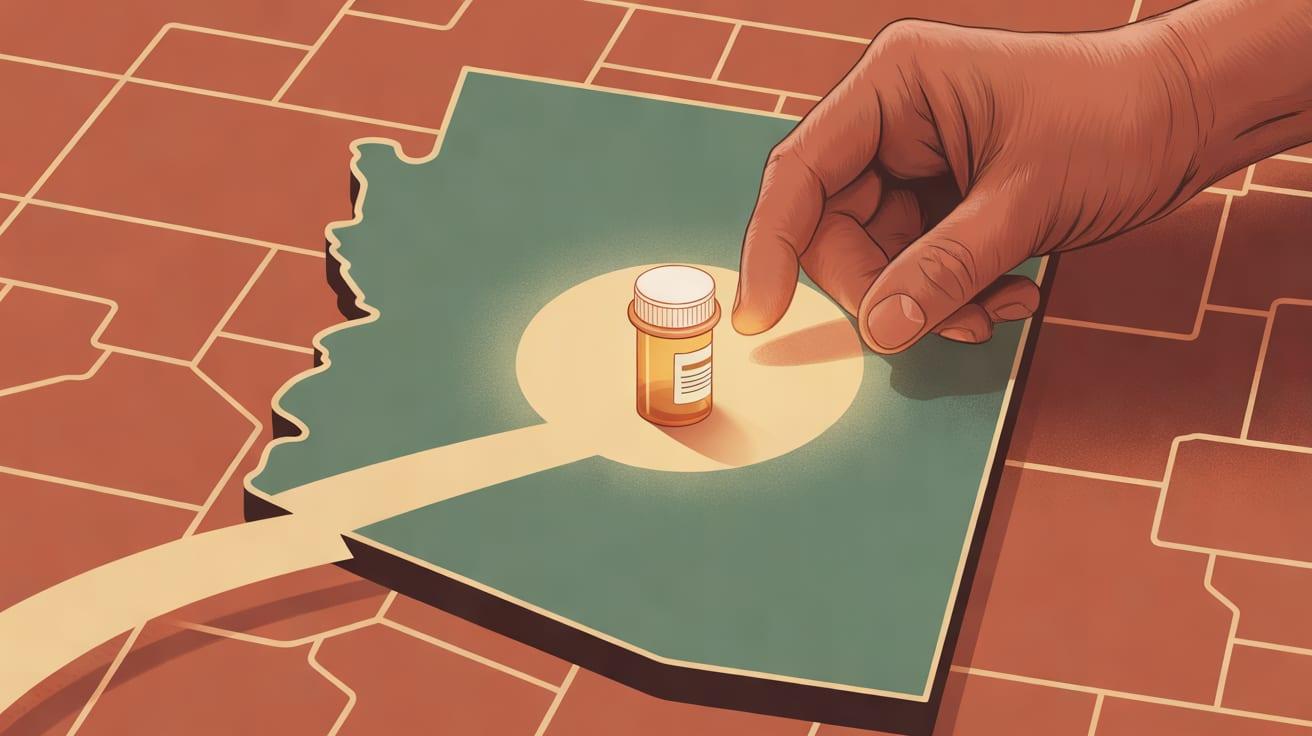
Significant Medicare Part D changes in 2026, driven by the Inflation Reduction Act, introduce government-negotiated drug prices and set a new annual out-of-pocket spending cap at $3,100. These updates will directly impact your prescription costs and coverage options for our clients across Arizona.
Table of contents
- What Are the Key Medicare Part D Changes for 2026?
- How Does Medicare Drug Price Negotiation Work in 2026?
- What Does the New $3,100 Out-of-Pocket Cap Mean for Me?
- How Will My Part D Plan Options Change in 2026?
- What Are the Best Strategies to Manage My Prescription Costs?
- Frequently asked questions
What Are the Key Medicare Part D Changes for 2026?
The most significant updates to Medicare Part D for 2026 involve two main components: the implementation of negotiated drug prices and an adjustment to the maximum out-of-pocket (MOOP) spending limit for beneficiaries. For the first time, Medicare will directly negotiate prices for a select list of high-expenditure prescription drugs, which will lower costs for those specific medications. Simultaneously, the annual cap on what you pay out-of-pocket for your prescriptions will be set at $3,100. These updates are part of a larger redesign of the Part D benefit aimed at making prescription drugs more affordable and predictable for millions of Americans.
These are not minor tweaks; they represent a fundamental shift in how your prescription drug plan will function. Understanding these changes is the first step toward making informed decisions about your Medicare coverage for the upcoming year.
How Does Medicare Drug Price Negotiation Work in 2026?
Medicare's new ability to negotiate drug prices is a cornerstone of the 2026 updates. The process begins with the Centers for Medicare & Medicaid Services (CMS) selecting an initial list of 15 high-cost prescription drugs covered under Part D. These are typically drugs without generic or biosimilar competition that account for a significant portion of Medicare spending.
Once the drugs are selected, CMS enters a negotiation process with the manufacturers to establish a "Maximum Fair Price" (MFP). This negotiated price is the highest price that any Part D plan can pay for that drug. The MFP will be published and will take effect starting in 2026. This means if you are prescribed one of the negotiated drugs, your cost-sharing (copay or coinsurance) will be based on this new, lower price, regardless of which Part D plan you have.
Keep in mind that this program will expand over time. The list of negotiated drugs will grow in subsequent years, including drugs covered under Part B starting in 2028. This long-term strategy aims to systematically reduce costs for the most expensive medications on the market.
[!NOTE] Negotiation is a Gradual Process The initial list of negotiated drugs for 2026 is limited. Most of your prescriptions will not be on this list at first. The primary benefit in the early years will be for beneficiaries taking one of the specific, high-cost medications selected for negotiation.
What Does the New $3,100 Out-of-Pocket Cap Mean for Me?
The 2026 Medicare Part D out-of-pocket cap of $3,100 means you will not pay more than that amount for your covered prescription drugs during the calendar year. Once your total out-of-pocket spending on deductibles, copayments, and coinsurance reaches $3,100, your plan will cover 100% of the cost of your covered drugs for the remainder of the year. You will have a $0 copay.
This provides a crucial financial safety net, especially for individuals with chronic conditions requiring expensive medications. Before this redesign, beneficiaries could face thousands of dollars in costs even after entering the "catastrophic coverage" phase. Now, there is a firm ceiling on your annual drug expenses.
[!WARNING] The 2026 Cap is Higher Than 2025 It's essential to know that the 2026 out-of-pocket maximum of $3,100 is an increase from the $2,000 cap that was in effect for 2025. This adjustment is part of the overall benefit redesign. While it's a higher threshold, the protection it offers against unlimited spending remains a powerful benefit.
This change simplifies the Part D benefit structure. It effectively eliminates the old model with its confusing coverage gap (or "donut hole") and catastrophic phase, replacing it with a more straightforward path to zero-cost prescriptions once the cap is met. For a complete picture of how Part D fits with other coverage, understanding the different parts of Medicare is essential.
How Will My Part D Plan Options Change in 2026?
While the core benefit structure is changing, you will still choose your Part D coverage from private insurance companies, either as a standalone plan or as part of a Medicare Advantage (Part C) plan. These 2026 changes to Medicare Part D will require these companies to redesign their plans to incorporate the negotiated prices and the new out-of-pocket cap.
Here's what you can expect to see during the Annual Enrollment Period:
- Updated Formularies: A plan's formulary is its list of covered drugs. Plans will adjust their formularies to reflect the new Maximum Fair Prices for negotiated drugs.
- Shifting Tiers and Cost-Sharing: Plans may adjust the tiering of drugs or change copay/coinsurance amounts to manage their costs under the new structure.
- New Premium Calculations: Premiums for Part D plans may change as insurers adapt to the new financial requirements of the benefit redesign.
These shifts make your annual plan review more critical than ever. A plan that was perfect for you last year might not be the best financial fit under the new rules. You must check that your specific medications are still on the formulary and understand your new cost-sharing responsibilities.
[!TIP] Review Your Annual Notice of Change (ANOC) Every September, your current plan will send you an ANOC document. This document explicitly details all the changes to your plan for the upcoming year, including premiums, deductibles, and formulary updates. Be sure to read it carefully.
What Are the Best Strategies to Manage My Prescription Costs?
With these significant changes, being proactive is the best way to manage your prescription drug expenses. A local, independent agent can provide personalized guidance, but you can also use these strategies to prepare.
| Strategy | How It Works | Best For Beneficiaries Who... | Potential Impact |
|---|---|---|---|
| Annual Plan Comparison | During the fall Annual Enrollment Period, actively compare your current plan against all other available options in your area. Look beyond the premium to check deductibles, formularies, and pharmacy networks. | Everyone. Plan benefits and costs change every year, and your needs may change too. | High. Choosing the optimal plan for your specific drug list is the single most effective way to save money. |
| Use Preferred Pharmacies | Many Part D plans have a network of "preferred" pharmacies where you can get your prescriptions for a lower copay than at "standard" network pharmacies. | Take multiple medications and can easily access a preferred pharmacy location. | Moderate. Savings on each prescription add up over the course of a year. |
| Talk to Your Doctor | Discuss your medications with your doctor. Ask if there are lower-cost alternatives, such as generics or different therapeutic options, that would be equally effective for your condition. | Are prescribed expensive brand-name drugs, especially those not on the negotiation list. | Varies. Can be very high if a suitable, low-cost generic is available. |
| Apply for Extra Help | The Part D Low-Income Subsidy (LIS), also known as Extra Help, is a federal program that helps people with limited income and resources pay for their prescription drug costs. | Meet the income and asset requirements for the program. | Very High. Can significantly reduce or even eliminate premiums and out-of-pocket costs. |
Navigating these options can feel overwhelming. That's why working with a local professional can make all the difference. An experienced Medicare agent in Mesa or your local Arizona city can do the comparison shopping for you, ensuring you find a plan that balances cost and coverage.
We're Here to Help You Navigate the Changes
The 2026 Medicare Part D landscape is changing for the better, with new protections designed to make medications more affordable. But change always brings questions, and you don't have to figure it out alone.
The team at Phoenix Health Insurance is composed of licensed, local agents who live and work in your community. We specialize in simplifying the complexities of Medicare. Contact our insurance office today for a no-cost consultation to review your 2026 plan options and ensure you're prepared for the year ahead.
Phoenix Health & Life Insurance LLC — 20823 N Cave Creek Rd, Building B Suite 101, Phoenix, AZ 85024 — (623) 516-8300
Frequently asked questions
Will my Medicare coverage change in 2026?
Yes, if you have Medicare Part D prescription drug coverage, your plan will change significantly in 2026. The main updates include the introduction of Medicare-negotiated prices for certain high-cost drugs and a new annual out-of-pocket maximum of $3,100 for your covered prescriptions.
What are the most important new rules for Medicare Part D in 2026?
The two most important new rules are the drug price negotiation program and the out-of-pocket cap. For the first time, Medicare will pay a negotiated, lower price for a specific list of drugs. Additionally, once a beneficiary's spending on covered drugs reaches $3,100 in a year, they will pay $0 for the rest of the year.
What is the best Medicare Part D plan for me?
There is no single "best" plan for everyone. The ideal plan depends entirely on your individual needs, specifically the prescription drugs you take, the pharmacy you prefer, and your budget. The best approach is to compare plans annually based on your specific medication list to find the one with the lowest total out-of-pocket cost.
Will specific drugs like Paxlovid be covered by Medicare in 2026?
Coverage for any specific drug, including Paxlovid, depends on whether it is included in your individual Part D plan's formulary (list of covered drugs). While Paxlovid has been covered differently during the public health emergency, its standard coverage going forward will be determined by each private insurance plan offering Part D benefits.
How do I know if my drug is on the negotiation list?
The Centers for Medicare & Medicaid Services (CMS) will publish the list of drugs selected for negotiation. For 2026, this list will include 15 Part D drugs. Your plan's materials and a licensed insurance agent can help you confirm if a medication you take is on the list and how it will affect your costs.
Is the $3,100 out-of-pocket cap per person?
Yes, the $3,100 maximum out-of-pocket limit for Medicare Part D is per individual beneficiary. If you and your spouse are both on Medicare, you each have your own separate $3,100 cap for your respective prescription drug costs.
Frequently Asked Questions
Will my Medicare coverage change in 2026?
Yes, if you have Medicare Part D prescription drug coverage, your plan will change significantly in 2026. The main updates include the introduction of Medicare-negotiated prices for certain high-cost drugs and a new annual out-of-pocket maximum of $3,100 for your covered prescriptions.
What are the most important new rules for Medicare Part D in 2026?
The two most important new rules are the drug price negotiation program and the out-of-pocket cap. For the first time, Medicare will pay a negotiated, lower price for a specific list of drugs. Additionally, once a beneficiary's spending on covered drugs reaches $3,100 in a year, they will pay $0 for the rest of the year.
What is the best Medicare Part D plan for me?
There is no single "best" plan for everyone. The ideal plan depends entirely on your individual needs, specifically the prescription drugs you take, the pharmacy you prefer, and your budget. The best approach is to compare plans annually based on your specific medication list to find the one with the lowest total out-of-pocket cost.
Will specific drugs like Paxlovid be covered by Medicare in 2026?
Coverage for any specific drug, including Paxlovid, depends on whether it is included in your individual Part D plan's formulary (list of covered drugs). While Paxlovid has been covered differently during the public health emergency, its standard coverage going forward will be determined by each private insurance plan offering Part D benefits.
How do I know if my drug is on the negotiation list?
The Centers for Medicare & Medicaid Services (CMS) will publish the list of drugs selected for negotiation. For 2026, this list will include 15 Part D drugs. Your plan's materials and a licensed insurance agent can help you confirm if a medication you take is on the list and how it will affect your costs.
Is the $3,100 out-of-pocket cap per person?
Yes, the $3,100 maximum out-of-pocket limit for Medicare Part D is per individual beneficiary. If you and your spouse are both on Medicare, you each have your own separate $3,100 cap for your respective prescription drug costs.